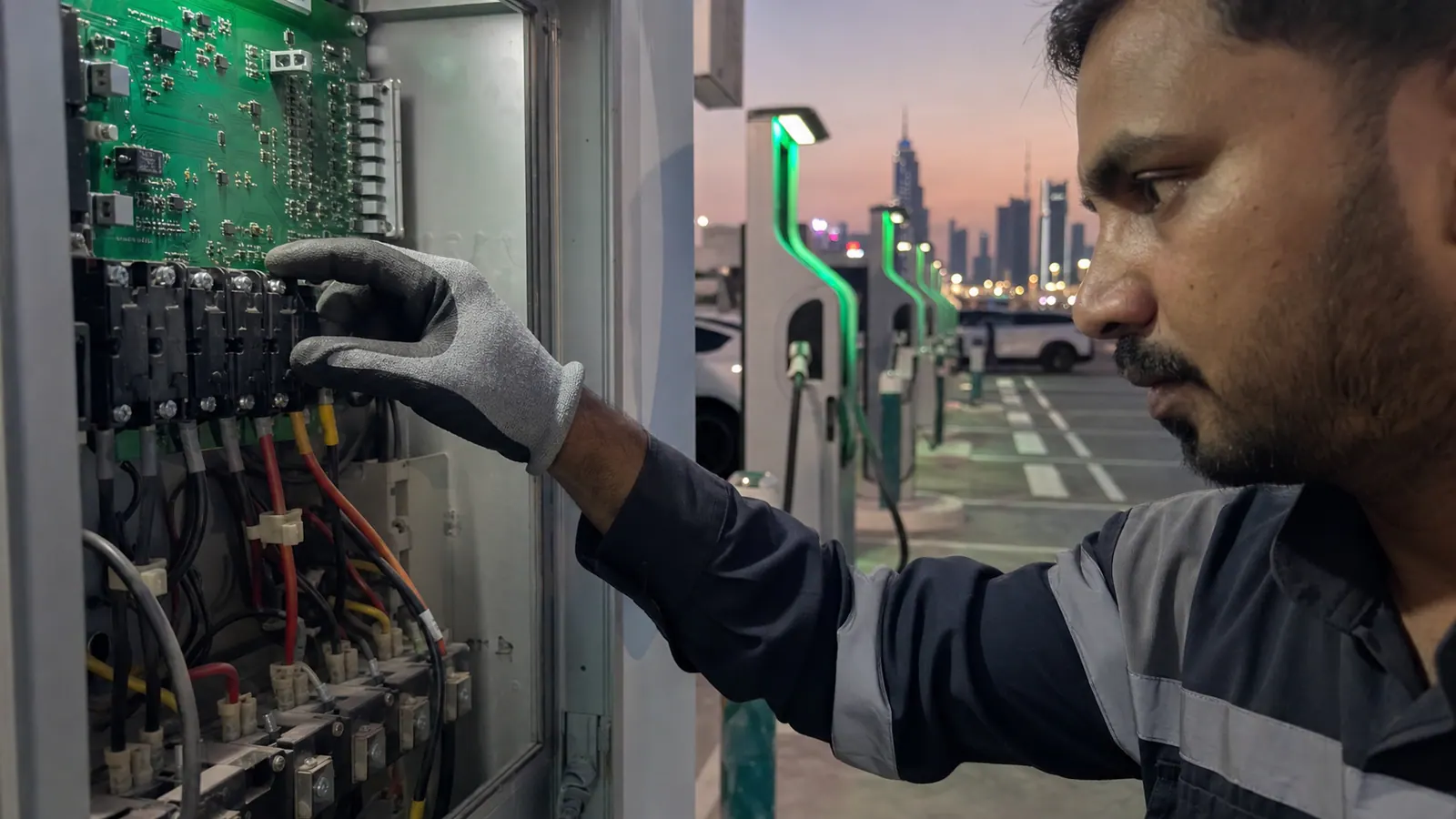
DEWA defines the public charging context; component approval remains an equipment-design task. Do not infer utility endorsement from a component’s technical suitability.
Why this matters in the UAE
The UAE is expanding charging infrastructure, but component qualification remains the equipment maker’s responsibility. The page must never imply DEWA or government approval without evidence.
What to specify before requesting a sample
Mode, topology and number of poles
Rated and fault current
Weld detection or auxiliary feedback
Applicable charger and residual-current standards
Relevant product pathways
A product family is a starting point, not a final part-number approval. Validate the exact model against the manufacturer datasheet and your test plan.
Evidence & primary sources
This guide supports discovery and specification. It does not replace safety analysis, standards review, application testing or written approval from the manufacturer.
Frequently asked questions
What should I include in an RFQ?+
Include system voltage, load type, continuous and inrush current, duty cycle, ambient and enclosure temperature, coil supply, required standards, annual volume and programme timing.
Is local UAE stock confirmed?+
No local-stock claim is made on this site. Ask our team to confirm availability, MOQ, lead time and fulfilment route for the exact ordering code.
Does technical fit mean the part is approved?+
No. Technical fit only identifies a candidate. Final approval requires the manufacturer datasheet, certificates where relevant, design review, samples and application testing.