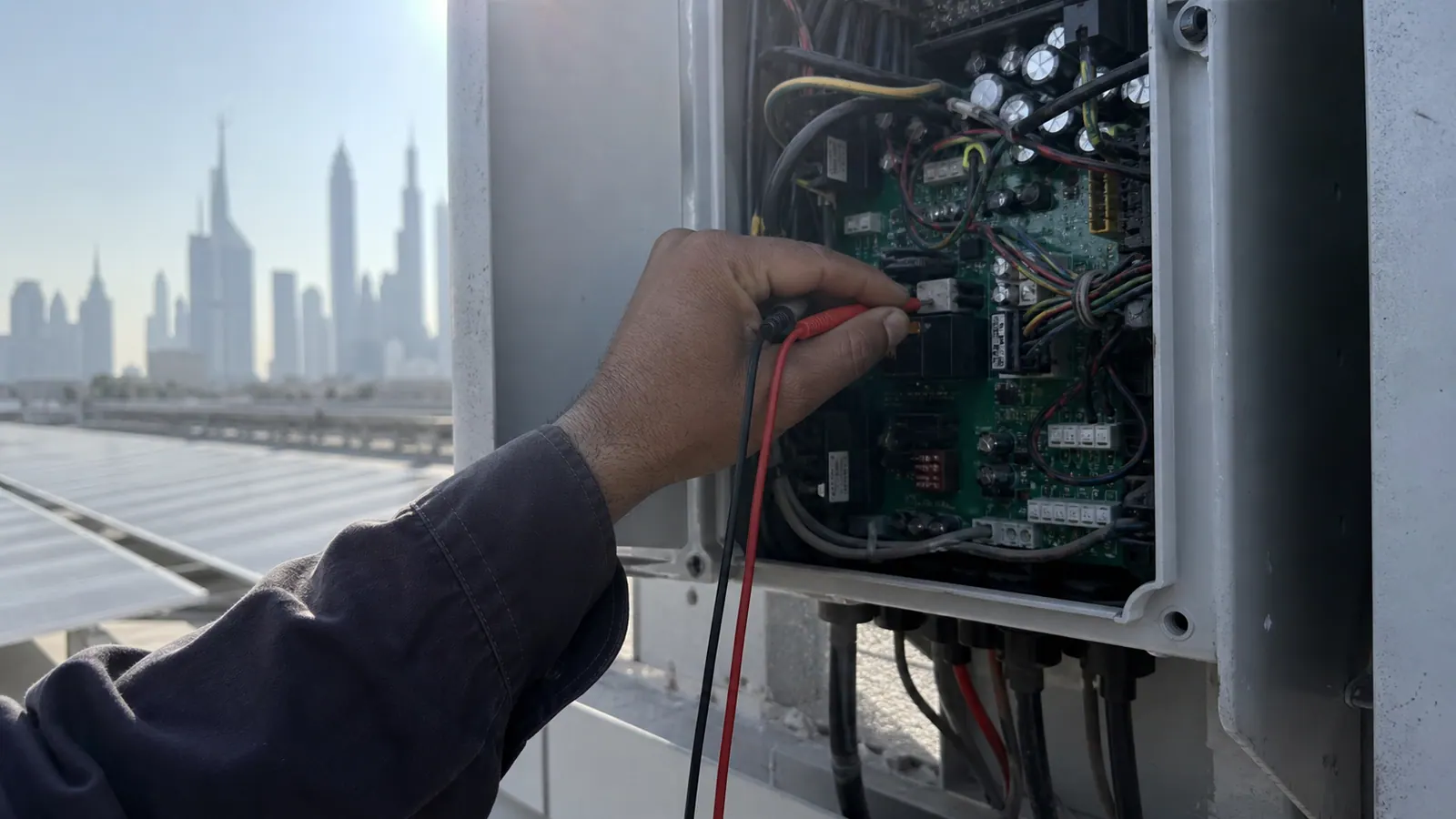
Derate for the real enclosure temperature, validate capacitor or transformer inrush, and separate grid-side AC switching from battery-side DC isolation requirements.
Why this matters in the UAE
Hot-climate enclosures and high-energy DC systems make thermal validation and protection coordination central to UAE solar and storage designs.
What to specify before requesting a sample
Maximum DC voltage and current direction
Pre-charge and capacitor inrush
Fuse or breaker coordination
Real enclosure temperature
Relevant product pathways
A product family is a starting point, not a final part-number approval. Validate the exact model against the manufacturer datasheet and your test plan.
Evidence & primary sources
This guide supports discovery and specification. It does not replace safety analysis, standards review, application testing or written approval from the manufacturer.
Frequently asked questions
What should I include in an RFQ?+
Include system voltage, load type, continuous and inrush current, duty cycle, ambient and enclosure temperature, coil supply, required standards, annual volume and programme timing.
Is local UAE stock confirmed?+
No local-stock claim is made on this site. Ask our team to confirm availability, MOQ, lead time and fulfilment route for the exact ordering code.
Does technical fit mean the part is approved?+
No. Technical fit only identifies a candidate. Final approval requires the manufacturer datasheet, certificates where relevant, design review, samples and application testing.